Ornamental
Plants grown mainly for aesthetic appeal—striking leaves, colorful bark, unique form, or seasonal displays. This tag can overlap with “flower,” “shrub,” or “succulent,” but the unifying theme is visual impact outweighing food or medicine.
-
![]()
Arbor Vitae: In Search of the Tree of Life
The “tree of life,” or arbor vitaæ, has long been surrounded by mystery and debate over its true identity. This story traces how the St. Lawrence Iroquois used the tree’s medicinal properties to aid French explorers and explores the evidence behind its botanical identification.
tree, conifer, ornamental, temperate -
![]()
Beyond the Silken Shadow: The Mulberry Tree's Metamorphosis and Homecoming
White mulberry (Morus alba) spread worldwide with sericulture, once symbolizing wealth but later scorned in the U.S. after failed silk schemes. Its North American cousin, red mulberry (Morus rubra)—long valued by Indigenous peoples for food, medicine, wood, and shade—now faces displacement by invasive white mulberry, prompting conservation efforts.
fiber, fruit, ornamental, temperate, tree -
![]()
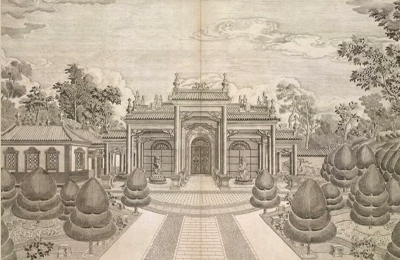
Boxwood: A Plant That Took Over the Garden World
Boxwood, once overlooked, rose to prominence as a popular ornamental plant but now faces serious threat from a destructive fungal disease. This story traces its journey to garden fame and highlights the urgency of protecting it from boxwood blight.
shrub, ornamental, temperate -
![]()
Cercidiphyllum japonicum: The Katsura at Dumbarton Oaks
The katsura tree at Dumbarton Oaks, with its sweeping branches and ancient roots, has stood since before the estate was purchased in 1920. This story traces the species’ long history—from prehistoric times to its poetic and horticultural significance in Japan and North America—revealing how it came to grace this Washington, D.C. garden.
tree, ornamental, temperate, cold-hardy -
![]()
Cryptomeria japonica: Climate Change, Cultivation, and Culture
Cryptomeria japonica, or sugi, is Japan’s national tree and has long held cultural and symbolic importance in the country’s landscape. This story traces how sugi’s role is evolving today as Japan grapples with the environmental and social impacts of aging monoculture forests.
tree, conifer, ornamental, temperate -
![]()
Dracaena draco: The Mystery of Dragon’s Blood
Despite its mythical name, “dragon’s blood” is a vivid red resin harvested from certain trees, most notably Dracaena draco and D. cinnabari. This story unpacks the centuries-old mystery of its origins and how human demand has threatened these iconic trees in the modern era.
succulent, ornamental, subtropical -
![]()
Guelder Rose: The Powerful Symbolism of a Plant in Ukraine and Russia
The guelder rose has evolved from a prehistoric European food and fuel plant into a powerful Ukrainian emblem of homeland, resistance, and identity. Its striking morphology underpins centuries of symbolism in songs, art, and literature across Ukraine and Russia, now crystallized in contemporary patriotic culture.
flower, fruit, medicinal, ornamental, shrub, temperate -
![]()
Guelder Rose: The Powerful Symbolism of a Plant in Ukraine and Russia (2 Column Layout)
The guelder rose has evolved from a prehistoric European food and fuel plant into a powerful Ukrainian emblem of homeland, resistance, and identity. Its striking morphology underpins centuries of symbolism in songs, art, and literature across Ukraine and Russia, now crystallized in contemporary patriotic culture.
flower, fruit, medicinal, ornamental, shrub, temperate -
![]()
Heliconia: Evolution at Work
Heliconias, known for their striking tropical beauty, have long been popular in gardens but understudied by scientists due to collection challenges. This story highlights recent discoveries that reveal their complex relationships with animals and their remarkable role in shaping ecosystems.
flower, ornamental, tropical -
![]()
Jasmine: The Sensual and the Sacred
Jasmine, native to Central and South Asia, has spread worldwide through trade, empire, and cultivation. Its fragrance and beauty have made it central to religion, art, politics, and daily life—from Hindu and Buddhist rituals to Islamic gardens, from Chinese jasmine tea to French perfumery. Across cultures it symbolizes purity, sensuality, devotion, and transience, while also serving as adornment, medicine, and a political emblem, as in Tunisia’s “Jasmine Revolution.”
flower, medicinal, ornamental, shrub, subtropical, tropical -
![]()
Opium Poppy: A Cursed Beauty
The opium poppy has a long, complex history—as a sacred medicinal plant, a source of artistic inspiration, and a driver of addiction and conflict. This story traces its journey from ancient ritual use to modern controversy, revealing shifting perceptions of the poppy as both a symbol of beauty and a global blight.
flower, ornamental, psychoactive, medicinal -
![]()
Passionflower: Christian Curiosity, Exotic Vine, Tropical Fruit
The passionflower (Passiflora), native to the Neotropics, has carried shifting meanings across cultures. Indigenous peoples used it for food and medicine, while Europeans saw symbols of Christ’s Passion in its flowers. By the Victorian era, it was reinterpreted as a sign of exotic beauty and sensuality, spreading into gardens, decorative arts, and poetry. Today, with over 500 species and 400 hybrids, passionflowers are cultivated worldwide for their striking flowers and edible fruits, now celebrated globally as passionfruit.
flower, fruit, medicinal, ornamental, tropical, vine -
![]()
Pelargonium: By Any Other Name Would Smell as Sweet?
Charles Dickens adored the scarlet “geranium,” but the plant he loved was actually a pelargonium—long mistaken for its namesake. This story untangles their identities and reveals the pelargonium’s distinct history and influence across science, industry, and culture.
shrub, herb, ornamental, temperate -
![]()
Peony: Pretty and Powerful
Peonies are prized today for their stunning blooms, but they also have a rich medicinal legacy spanning over 2,000 years in Europe and Asia. This story uncovers lesser-known episodes in peony’s history, including its use in healing remedies like a “miraculous” infant convulsion powder.
flower, ornamental, temperate -
![]()
Sunflower: Knowledge, Myth, and Meaning
The sunflower (Helianthus annuus) is instantly recognizable and widely celebrated in art and imagery, often overshadowing the plant itself. This story traces the sunflower’s cultural and visual history, revealing how its striking form helped shape myths, meanings, and botanical understanding over time.
flower, oilseed, ornamental, temperate -
![]()
The Corpse Flower - Amorphophallus titanium
The corpse flower, known for its massive size and foul odor, draws huge crowds when it blooms—an event that happens only once every 5 to 10 years. This story explores the plant’s rare and spectacular flowering, its unique pollination strategy, and its rising popularity as a star attraction at botanic gardens across the U.S.
flower, ornamental, tropical -
![]()
The Gulmohar: Becoming Native
This article explores the history and cultural significance of the Gulmohar tree (Delonix regia), tracing its journey from Madagascar to India through colonial botanical networks in the nineteenth century.
flower, ornamental, subtropical, tree, tropical -
![]()
The Sensitive Plant: Meaning and Movement
Mimosa pudica, known for its touch-sensitive leaves, has captivated observers for centuries, sparking fascination with plant intelligence. This story traces how the plant’s responsiveness inspired both scientific curiosity and colonial exploitation, while highlighting the resilience of diverse cultural knowledge systems surrounding it.
shrub, ornamental, nitrogen-fixer, tropical -
![]()
Venus Flytrap: Queen of the Carnivorous Plants
The Venus flytrap (Dionaea muscipula), once dubbed a “miracle of nature” by Linnaeus, has fascinated botanists and poets alike for centuries with its carnivorous adaptations. This story traces its discovery, scientific acclaim, and the cultural intrigue it inspired, revealing how this small plant captured the imagination of naturalists across continents and eras.
carnivorous, ornamental, wetland, temperate